

The Cosmic Perspective
At its highest literary plateau, science fiction is a philosophical laboratory. It uses speculative premises—faster-than-light distances, alien biology, artificial intelligence, and deep planetary time—not for escapism, but to strip away human vanity and inspect what remains. When confronted with an uncaring universe whose scale dwarfs our entire biological existence, our political squabbles and social constructs dissolve into cosmic perspective.
The greatest philosophical science fiction does not offer neat, comfortable resolutions. It leaves the reader staring into the night sky with a thrilling, terrifying vertigo: questioning whether human consciousness is truly a crowning achievement or merely an evolutionary accident.
Ecology & Messianic Deconstruction
Frank Herbert’s "Dune" revolutionized speculative fiction by positioning planetary ecology as the fulcrum of galactic empire. Arrakis is not a backdrop; it is an intricately balanced biome where water is sacred currency. Herbert’s genius lay in his subversion of the hero’s journey: Paul Atreides is not a triumphant savior, but a warning against charismatic leaders whose messianic myths trap civilizations in uncontrollable holy wars.

Dune
by Frank Herbert • (1965) • 688 pages
Set on the desert planet Arrakis, Dune is the story of the boy Paul Atreides, heir to a noble family tasked with ruling an inhospitable world where the only thing of value is the "spice" melange, a drug capable of extending life and enhancing consciousness. Coveted across the known universe, melange is a prize worth killing for.
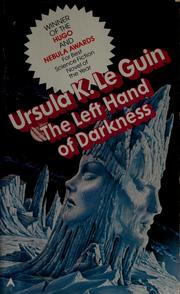
Ursula K. Le Guin brought profound anthropological philosophy to the genre. In "The Left Hand of Darkness", she imagines Gethen, an icy world where inhabitants have no permanent gender, fundamentally questioning how sex shapes war, language, and diplomacy. In "The Dispossessed", she explores the ambiguous utopia of Anarres, contrasting the austere freedom of an anarchist collective against the gilded corruption of a capitalist oligarchy.

The Left Hand of Darkness
by Ursula K. Le Guin • (1969) • 304 pages
A human envoy is sent to the icy world of Gethen with the mission of facilitating its inclusion in a growing intergalactic confederation. But Gethen is unlike any world he has ever known: its inhabitants are ambisexual, possessing no fixed gender. To survive political scheming, Genly must make an impossible trek across the Karhide glacier with a disgraced politician.

The Dispossessed
by Ursula K. Le Guin • (1974) • 400 pages
Shevek, a brilliant physicist from the arid anarchist world of Anarres, risks everything by traveling to the lush, capitalist home world of Urras to complete his General Temporal Theory. Le Guin crafts an unforgettable portrait of an ambiguous utopia, contrasting the hunger and freedom of collective life against the wealth and corruption of property.
The Unknowable Alien Mind
In Stanislaw Lem’s "Solaris", the crew of a research station orbit a sentient ocean that covers an entire planet. Lem brilliantly dismantles the anthropocentric myth that humanity can casually communicate with alien intelligence. The ocean does not trade radio waves or greetings; it reaches into the researchers’ subconscious minds and physicalizes their most shameful memories as flesh-and-blood phantoms, turning first contact into a terrifying mirror of human guilt.

Solaris
by Stanislaw Lem • (1961) • 224 pages
When psychologist Kris Kelvin arrives at the research station hovering above the oceanic planet Solaris, he finds the crew deranged and terrified by physical phantoms materialized from their deepest, most shameful memories. Stanislaw Lem crafts the definitive meditation on the terrifying impossibility of truly understanding an alien intelligence.
Arthur C. Clarke’s "Rendezvous with Rama" reinforces this cosmic indifference: the fifty-kilometer alien cylindrical vessel that swings past our sun ignores human probes entirely. It was built for purposes beyond human comprehension, reminding humanity that we are not the protagonists of the universe.

Rendezvous with Rama
by Arthur C. Clarke • (1973) • 256 pages
In the twenty-second century, a massive cylindrical object fifty kilometers long tumbles into the solar system from deep interstellar space. The survey vessel Endeavour is dispatched to intercept it. What the astronauts find within its hollow, spinning interior is a perfectly engineered, enigmatic world devoid of biological life.
Consciousness, AI & The Dark Forest
Dan Simmons’s "Hyperion" uses Chaucer’s Canterbury pilgrimage to explore theological dread, time reversal, and the bloodthirsty god known as the Shrike. William Gibson’s "Neuromancer" coined cyberspace as a "consensual hallucination", prophesying how corporate feudalism and autonomous AI algorithms would transcend human masters.

Hyperion
by Dan Simmons • (1989) • 512 pages
On the eve of armageddon, with the entire galaxy at war, seven pilgrims embark on a final voyage to Hyperion to seek the answers to the unsolved riddles of their lives. Each carries a desperate hope—and a terrible secret. And one may hold the fate of humanity in his hands. A towering epic of literary space opera.

Neuromancer
by William Gibson • (1984) • 336 pages
The sky above the port was the color of television, tuned to a dead channel. Case had been the sharpest data-thief in the business, until his nervous system was crippled by vindictive ex-employers. Now a mysterious new employer recruits him for a last-chance run at an unthinkably powerful artificial intelligence orbiting in deep space.
Peter Watts’s "Blindsight" delivers the ultimate existential blow through cognitive neurology: what if consciousness and self-awareness are inefficient evolutionary bottlenecks, and the true apex predators of the cosmos are superintelligent biological machines that feel nothing at all? Alongside Cixin Liu’s "The Three-Body Problem", these novels expand the mind to its breaking point.

Blindsight
by Peter Watts • (2006) • 384 pages
Two months after sixty-five thousand alien probes photograph the entire Earth in a blinding firestorm, the research vessel Theseus is dispatched to the edges of the solar system. Commanded by a genetically resurrected vampire and crewed by cognitively altered specialists, they encounter an alien entity that questions whether consciousness itself is merely an evolutionary dead end.

The Three-Body Problem
by Cixin Liu • (2014) • 400 pages
Set against the backdrop of China's Cultural Revolution, a secret military project sends signals into space to establish contact with aliens. An alien civilization on the brink of destruction captures the signal and plans to invade Earth. Meanwhile, on Earth, different camps form, planning to either welcome the superior beings or fight against the invasion.


