Cover of Do It Like a Woman: ... and Change the World
Read Time: ~5.1 hr

Do It Like a Woman: ... and Change the World

by Caroline Criado Perez (2015)

About this book

An impassioned celebration of bold, pioneering women who overturned convention, fought oppression, and reshaped history across politics, science, human rights, and art in every corner of the globe.

Setting / LocationGlobal
Story EraContemporary
Protagonist / CoreTrailblazing Women

Readers who enjoyed this also loved

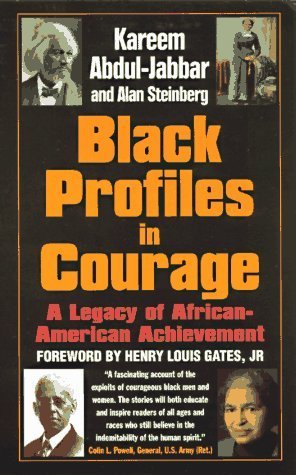
Cover of Black Profiles in Courage : A Legacy of African American Achievement

Black Profiles in Courage : A Legacy of African American Achievement

Kareem Abdul-Jabbar

Black Profiles in Courage : A Legacy of African American Achievement is an essential work by Kareem Abdul-Jabbar (2015), examining critical themes of civil rights, racial justice, and human resilience. A cornerstone selection on the acclaimed #BlackLivesMatter reading list, it offers profound social commentary, historical resonance, and transformative insight.

Cover of The populist persuasion

The populist persuasion

Michael Kazin

Our Constitution promises a government of the people, by the people, and for the people - but who are "the people"? And who can honestly claim to speak for "the people"? Here, in the first comprehensive history of populism in our nation, Michael Kazin examines the strange career of populist politics from the era of Thomas Jefferson to the era of William Jefferson Clinton. Once identified with the dispossessed, the poor and exploited workers from farm and factory, populism in recent years has been brought to the forefront of the political landscape, embraced by the likes of Ronald Reagan and Jesse Jackson and glibly applied to figures ranging from Bruce Springsteen to Rush Limbaugh. Kazin calls populism an impulse rather than an ideology. He defines it as a mode of political persuasion that combines anti-elitism, adoration of the common people (usually defined as hardworking, pious, and, until quite recently, white), and a belief in the American ideal of democracy that the power brokers in business, government, and academia have betrayed. Kazin argues that populism has undergone two major transformations since the defeat of the People's Party, the original Populists, in the mid-1890s. The first was a split between those who viewed "the people" as a group belonging above all to God and those who viewed ordinary Americans in primarily economic terms. The second, an ongoing shift to the Right, began in the McCarthy era. The movement was transformed by the onset of the Cold War, the ideological mellowing of the labor movement, and the New Left's self-imposed alienation from the American mainstream. In the 1960s, George Wallace showed how to attract blue-collar Democrats with populist rhetoric. Then Richard Nixon and Ronald Reagan captured and refined populist themes for the benefit of the Republican Party. Kazin shows that the Right's conception of a struggling middle class beset by an inept, immoral state remains vigorous and limits what Bill Clinton or anyone to his left can accomplish. The Populist Persuasion unrolls a fascinating narrative of our country's history, richly endowed with examples demonstrating the flexibility of populist rhetoric. Bringing to life the powerful voices of past leaders, Kazin shows how they both inform the political debates of our own time and point with hope toward a future in which the country will live up to its original democratic ideals.

Cover of The speech

The speech

Gary Younge

"Praise for Gary Younge's Stranger in a Strange Land: Encounters in the Disunited States: "Abroad in America, Gary Younge is an acutely skeptical observer." -Jonathan Raban "Gary Younge is an excellent journalist-a critical writer at a critical time."-Andrea Levy "One of the tiny handful of contemporary journalists left who is consistently worth reading. A voice for our times." -Stuart Hall Praise for No Place Like Home: A Black Briton's Journey Through the American South: "Younge's book is a blend of travelogue, historical research, and social commentary leavened with the sharp eyes and tongue of an outsider examining the American racial milieu." -Booklist Praise for Who Are We-And Should it Matter: "Penetrating and provocative." -The Guardian It was a sweltering eighty-seven degrees when Martin Luther King took the stage at the Lincoln Memorial in 1963. He was the final speaker after a long day. The crowd, which numbered in the tens of thousands, had begun to leave. King took a deep breath and threw back his shoulders. "I say to you today, my friends, so even though we face the difficulties of today and tomorrow, I still have a dream. "Martin Luther King, Jr., delivered his powerful "I Have a Dream" speech on August 28, 1963. Fifty years later, The Speech endures as a defining moment in the Civil Rights movement. It continues to be heralded as a beacon in the ongoing struggle for racial equality. This gripping book unearths the fascinating chronicle behind The Speech and the revealing events surrounding the march on Washington. Gary Younge is an author, broadcaster, and award-winning columnist for the Guardian and the Nation. His books include Who are We--And Should it Matter In the 21st Century and No Place Like Home, shortlisted for the Guardian first book award."-- "Martin Luther King, Jr., delivered his powerful "I Have a Dream" speech on August 28, 1963. Fifty years later, The Speech endures as a defining moment in the Civil Rights movement. It continues to be heralded as a beacon in the ongoing struggle for racial equality. This gripping book unearths the fascinating chronicle behind The Speech and the revealing events surrounding the march on Washington"--

Cover of After Khomeini

After Khomeini

Saïd Amir Arjomand

Much of the Western world responded to Iran's recent post-election upheaval with surprise. The demands of protesters left many pundits scrambling to explain what they perceived as unprecedented politicization of the citizenry. The author analyzes Iran's political and ideological transformation in the post-Khomeini period. For many Americans, Iran is our most dangerous enemy--part of George W. Bush's "axis of evil" even before the appearance of Ahmadinejad. But what is the reality? How did Ahmadinejad rise to power, and how much power does he really have? What are the chances of normalizing relations with Iran? In After Khomeini, Saïd Amir Arjomand paints a subtle and perceptive portrait of contemporary Iran. This work, a sequel to Arjomand's acclaimed The Turban for the Crown, examines Iran under the successors of Ayatollah Khomeini up to the present day. He begins, as the Islamic Republic did, with Khomeini, offering a brilliant capsule biography of the man who masterminded the revolution that overthrew the Shah. Arjomand draws clear distinctions between the moderates of the initial phrase of the revolution, radicals, pragmatists, and hardliners, the latter best exemplified by Mahmud Ahmadinejad. Taking a chronological and thematic approach, he traces the emergence and consolidation of the present system of collective rule by clerical councils and the peaceful transition to dual leadership by the ayatollah as the supreme guide and the subordinate president of the Islamic Republic of Iran. He explains the internal political quarrels among Khomeini's heirs as a struggle over his revolutionary legacy. And he outlines how the ruling clerical elite and the nation's security forces are interdependent politically and economically, speculating on the potential future role of the Revolutionary Guards. -- Publisher description.

Do It Like a Woman: ... and Change the World by Caroline Criado Perez | Synopsis, Reviews & Preview | Literally Just Books