Incognegro
Mat Johnson
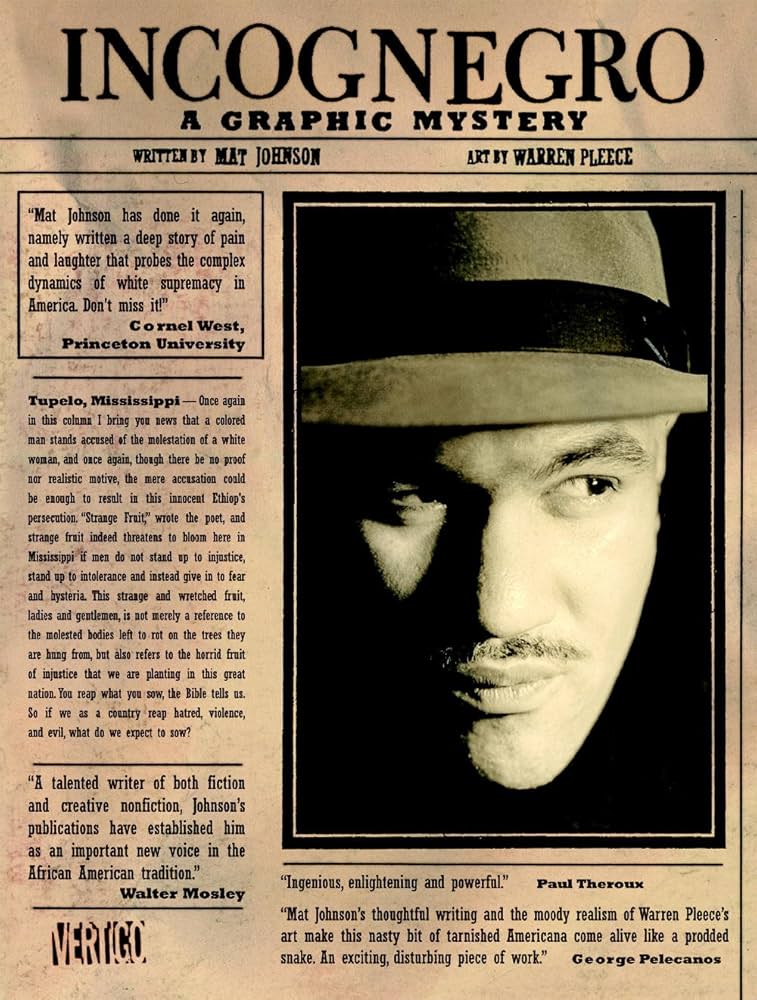
"Writer Mat Johnson (HELLBLAZER: PAPA MIDNITE), winner of the prestigious Hurston-Wright Legacy Award for fiction, constructs a fearless graphic novel that is both a page-turning mystery and a disturbing exploration of race and self-image in America, masterfully illustrated with rich period detail by Wareen Pleece (THE INVISIBLES, HELLBLAZER). In the early 20th Century, when lynchings were commonplace throughout the American South, a few courageous reporters from the North risked their lives to expose these atrocities. They were African-American men who, due to their light skin color, could “pass” among the white folks. They called this dangerous assignment going “incognegro.”" From Publishers Weekly The brows are furrowed and teeth mightily clenched in Pleece's noirish artwork for Johnson's pulpy tale of a black journalist who goes undercover in the 1930s South to investigate a possible trumped-up murder charge against his brother—a charge that could lead to a lynching. Zane Pinchback, who is so light-skinned he can pass for white with a little cosmetic help, writes the Incognegro column for a Harlem newspaper, and his beat (like that of many a brave black journalist at the time) is the bloody circus of lynchings still claiming lives in horrendous numbers. Johnson's tale is a smart and fast-paced one, particularly when dealing with Pinchback's reluctance to return to Mississippi (wisely preferring his comparatively sheltered Harlem life). Once he's back down South, the twists and turns of the story come fast and thick, goosed by the not particularly trustworthy explanations being given by Zane's moonshine-distilling brother, and the attention-drawing antics of Zane's playboy friend Carl, who invited himself along on a lark. Johnson and Pleece have done a mostly commendable job, though the plot gets too knotted for its own good long before the conclusion, but they give a cracking Chester Himes kick to what could have been a sub–Walter Mosley imitation. (Feb.) Copyright © Reed Business Information, a division of Reed Elsevier Inc. All rights reserved. --This text refers to an out of print or unavailable edition of this title. From Booklist As a light-skinned African American growing up in a predominantly dark-skinned neighborhood, Johnson was electrified when he learned about the early exploits of Walter White, executive secretary of the NAACP, 1931–55. In 1919, White used his own pale skin to pass for a white and investigate lynchings in the deep South. Inspired by White’s experiences, Johnson tells the similar story of Harlem journalist Zane Pinchback, whose own eyewitness reports of lynchings are regularly written up in a New York periodical under the byline Incognegro. Pinchback is on the verge of abandoning his undercover work for an editor’s job when he discovers his own brother is in jail and days away from lynching for apparently murdering a white woman. How Pinchback tracks down the real killer, saves his brother’s life, and narrowly escapes an angry mob form the plot of a riveting meditation on racism and self-reliance. The beautiful chiaroscuro pen-and-ink illustrations provided by veteran artist Pleece bring to vivid life one of the darkest chapters in America’s racial history. --Carl Hays --This text refers to an out of print or unavailable edition of this title.