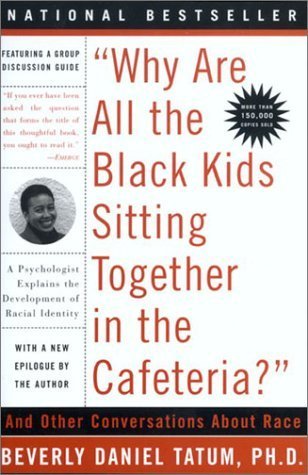
Cover of Why Are All The Black Kids Sitting Together in the Cafeteria?
Read Time: ~5.3 hr

Why Are All The Black Kids Sitting Together in the Cafeteria?

by Beverly Daniel Tatum (1970)

About this book

There is a moment when every child leaves color-blindness behind & enters the world of race consciousness. At that moment, there are two roads parents, educators, & therapists can take: they can follow the status quo, internalizing racial expectations, & become-consciously or unconsciously-part of the problem. Or, they can question stereotypes, &, actively work against racism to become part of the solution. This book provides the tools we all need to become part of the solution. Beginning with racial segregation in an integrated school situation, this book explores race relations & the development of racial identity from many different viewpoints. Walk into any racially mixed high school and you will see black youth seated together in the cafeteria. Of course, it's not just the black kids sitting together-the white, Latino, Asian Pacific, and, in some regions, American Indian youth are clustered in their own groups, too. The same phenomenon can be observed in college dining halls, faculty lounges, and corporate cafeterias. What is going on here? Is this self-segregation a problem we should try to fix, or a coping strategy we should support? How can we get past our reluctance to talk about racial issues to even discuss it? And what about all the other questions we and our children have about race? Beverly Daniel Tatum, a renowned authority on the psychology of racism, asserts that we do not know how to talk about our racial differences: Whites are afraid of using the wrong words and being perceived as "racist" while parents of color are afraid of exposing their children to painful racial realities too soon. Using real-life examples and the latest research, Tatum presents strong evidence that straight talk about our racial identities-whatever they may be-is essential if we are serious about facilitating communication across racial and ethnic divides. We have waited far too long to begin our conversations about race. This remarkable book, infused with great wisdom and humanity, has already helped hundreds of thousands of readers figure out where to start. -- Publisher.

Setting / LocationUnited States / Global
Story EraCivil Rights Era
Protagonist / CoreNotable Figure / Community

Readers who enjoyed this also loved

Cover of All Aunt Hagar's Children

All Aunt Hagar's Children

Edward P. Jones

In fourteen sweeping and sublime stories, five of which have been published in The New Yorker, the bestselling and Pulitzer Prize-winning author of The Known World shows that his grasp of the human condition is firmer than everReturning to the city that inspired his first prizewinning book, Lost in the City, Jones has filled this new collection with people who call Washington, D.C., home. Yet it is not the city's power brokers that most concern him but rather its ordinary citizens. All Aunt Hagar's Children turns an unflinching eye to the men, women, and children caught between the old ways of the South and the temptations that await them further north, people who in Jones's masterful hands, emerge as fully human and morally complex, whether they are country folk used to getting up with the chickens or people with centuries of education behind them.In the title story, in which Jones employs the first-person rhythms of a classic detective story, a Korean War veteran investigates the death of a family friend whose sorry destiny seems inextricable from his mother's own violent Southern childhood. In "In the Blink of God's Eye" and "Tapestry" newly married couples leave behind the familiarity of rural life to pursue lives of urban promise only to be challenged and disappointed.With the legacy of slavery just a stone's throw away and the future uncertain, Jones's cornucopia of characters will haunt readers for years to come.

Why Are All The Black Kids Sitting Together in the Cafeteria? by Beverly Daniel Tatum | Synopsis, Reviews & Preview | Literally Just Books